Welcome to The Dapper Den, new barbershop location at 196 Church St. Keswick
The Dapper Den Barber Shop is a champion of buddyup
We have partnered to help spread awareness…
The Dapper Den proudly supports Buddy Up, a suicide prevention campaign that encourages men to have honest conversations and offer support to their friends during difficult times.
Our barber shop is also a safe place for honest conversations surrounding mental health. This page was created and will be added to as a resource to learn more about not just saying—but doing what we can to pay attention and buddyup when and where we can.
In addition to this page, and the Centre for Suicide Prevention toolkit guides we have available in shop, you can find many resources and much more information about prevention and the buddy up campaign at suicideinfo.ca or https://www.buddyup.ca/learn/ #buddyup

June is Men’s mental health Month
June is Men’s Mental Health Awareness Month with Men's Mental Health Awareness Day in Canada—observed annually on June 13th to reduce stigma, normalize conversations, and encourage men to seek help aiming to address that men often present symptoms differently and face higher suicide rates.
We must continue the conversation about suicide awareness. Actually, conversations about all mental health should also happen year-round, whenever opportunities arise.
Our mental health is influenced by many factors, including the state of one’s physical health, financial situation, daily stressors, relationships, sudden life changes, work or lack of, and even the long, cold winter months.
Every year, the World Health Organization reports that over 700,000 people die by suicide worldwide.
This translates to the loss of one life every 40 seconds.
These statistics represent real people, real pain, and silent struggles that many go through without ever being noticed.
Some of the toughest battles are hidden behind a facade of “I’m fine.” Living with depression, anxiety and/or PTSD is incredibly draining, and many people may never fully grasp the extent of it. Others offer dismissive comments like “just cheer up, or “calm down” or “you’re overreacting,” completely unaware of the internal struggles the individual is facing.
Toxic positivity is not helpful! What may seem insignificant to one person can feel overwhelming to another due to the heavy burdens of constant pain, trauma, fear, and/or experiences they carry.
💌REMEMBER Compassion is free. Instead of judging people based on their reactions to stress or pain, try listening, understanding, and offering them kindness. Some battles are invisible, yet they’re very real.

check in with a buddy
Connection doesn’t have to be complicated. Sometimes it’s as simple as:
- checking in with a friend
- inviting someone for coffee
- starting a conversation about mental health
- reaching out to someone who may be struggling
These small moments can make a big difference.
Research shows that strong social connections improve well-being, help people manage stress, and support healthier communities.
Here is a short list of the four main steps how you can be a buddy— for the men in your life including your boss, co-workers, friends, family, and any other men you spend time with on a regular basis. Buddy up!
1. Pay attention
Any noticeable change in behaviour is a warning sign your friend might not be doing well. Examples: Acting more withdrawn or conversely suddenly making jokes about suicide or other serious subjects. Acting recklessly, drinking more, or sudden obvious personality changes like anger.
2. Start a conversation
Spend some time together over a lunch or during activity. Choose a comfortable setting Or even over the phone. Mention if you haven’t seen them around lately or noticed a change. Ask how they are doing. Ask twice— How they are really doing?
3. Keep it going
Ask questions and listen to what he's saying, don't downplay or change the subject. Acknowledge their feelings. If you’re concerned ask if they have considered talking to someone, spend time with them, let them know you are there for them. Share contacts of assistance—Look up contacts if needed. (some resources listed below)
4. Stick to your role
Encourage them to reach out to others— remember You're a friend, not a trained counsellor, help them get more assistance and check in often. If someone is in immediate need stay with them while they call the 9-8-8, dial 911 or take them to the nearest emergency room depending on the situation.
Join the campaign
If you have a workplace or organization that may be interested in being a champion for men’s mental health?
Watch the buddyup champion
campaign webinar linked here—https://youtu.be/cSBRYWYbZfg?si=6W7EXrqWlmqZSkD5
Please remember during all the months to try to be a bit more gentle with yourself and others. A kind word, a bit of patience, and checking in can make a big difference. Remind people they matter more than they think, and that these feelings linger longer than we realize.
it is okay not to be ok
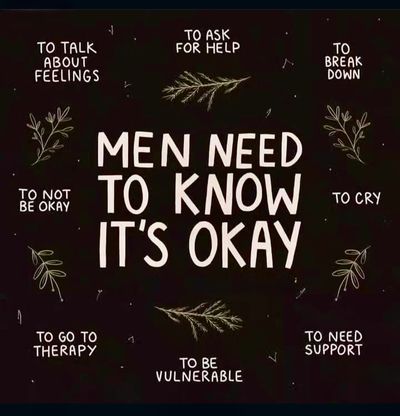
If you or someone you know is struggling, or things have just felt heavy lately, remember you don’t have to carry everything alone. Struggling isn’t a sign of weakness, and seeking support isn’t shameful. Sometimes, simply getting through the day is enough, and that deserves more recognition than it often gets. Talk to someone about your feelings, you are not alone.
The world is always still better with you in it, even on the days your mind tries to convince you otherwise. 🤍
The Dapper Den— Championing Men’S Mental Health Awareness

My Why—
I’ve personally battled mental health challenges for years prior, throughout, and after my breast cancer treatments, including severe depression and GAD. I also lost both my brother Ken, and more recently a friend to suicide. They were both men around 40 years of age. It took me quite some time to reconcile with not being able to help or stop them. Owning a barbershop gives me a unique platform to provide this information now to men in support for other men and for anyone else… male or female who seeks it.
Mental health and especially suicidal thoughts and tendencies are very difficult to talk about for men and sadly we must realize not everyone can be helped in time, we may never see the change coming, those we know, love, and care about may lack or outright hide any visible signs.
Perhaps we simply miss the signs at the moment. In hindsight, we may realize their struggles. While “what ifs” and “what if onlys” can be overwhelming, and the devastation they cause can be immense, please know as learned myself, you can’t hold yourself responsible for someone else’s actions.
Ultimately, it is one’s choice to make. However, please be reassured there are so many more success stories of people reaching out for treatment, and getting better and living fulfilling lives, but that person has to want to live in some capacity for that to occur.
Unfortunately we cannot predict the outcomes of our intervention. We can act in the present to try to be a buddy to others and provide support and possible prevention of what we can see… by being kind always, by listening, caring, remaining patient, understanding, and suggesting reaching out as needed for further and ongoing professional supports.