Welcome to The Dapper Den, new barbershop location at 196 Church St. Keswick
The Dapper Den— Where The Traditional Barbershop Continues…
History of Classic Barbering
Some history on traditional classic barbering... The word "barber" is actually derived from the Latin word "barba", which means beard, and the word "Tonsorial" translates to cutting, clipping or trimming of hair with shears or razors.
This is why the skillful techniques and tools used in classic barbering are just as important as the experience itself... the art form requires skill, passion, and dedication to master.
Classic barbering; "men's hairstyling" is an art form that has stood the test of time. The tonsorial concept dates back to Roman Times combining technical skill and artistry to create a unique and enjoyable experience for clients.
Anthony and Bonnie have remained true to the roots of the traditional manual techniques of classic mens hairstyling by offering an authentic and personalized experiences that cannot be replicated by modern machines or visit to a chain salon. Their polished techniques and scissor skills have been passed down from generation to generation, and while slightly evolved with the times, they still hold true to the timeless qualities that make them so unique. Finishing is key, it's in the details and the refinement of the craft!

Tools of the trade

Classic Contoured Traditional Scissor Cuts
It's True, Old Fashioned Barbers Use Scissors!
- Before clippers there were scissors. Apparently, the first scissors were used around 3,000 to 4,000 years ago in Egypt. They were made with two bronze blades connected by a thin, curved bronze strip at the end of the blades. Squeezing the blades brought them together and releasing opened them up. This is called "spring scissor," and it's a style still made to this day. The direct ancestor of modern-day scissors (two blades joined at a pivot) was created by the ancient Romans around 100AD and called "pivoted scissors".
- Before electric clippers they only had hand powered clippers, cousin to the scissor! The earliest form of the modern hair clipper was invented in 1855 and was manually operated. With this, hair trimming was achieved by clamping and releasing the tool's arms to move the blades... Just the same principle behind yes you guessed it SCISSORS!
- Sadly scissors have become a forgotten tool in many modern barbershops as manual barber tools require a good amount of effort and skill to operate. Well seasoned barbers have the steadiness and technical ability to cut the top shape of a flat top precisely using only scissors and a comb! Scissors are also used to form the fundamental connection between the top and bottom of any proper medium length tapered haircut such as a 1950’s taper. They are used to seamlessly blend clipper work into the longer lengths of a tapered style and also used to trim the "wild ones" be that on the head or eyebrows.
- Anthony and Bonnie, of the Dapper Den Keswick Barbershop —both specialize in the classic craft of barbering which includes providing seamlessly blended traditional haircuts for men, using both clippers and precision scissor work.
Straight Razor Shaving
It's True; Old Fashioned Barbers Shave!
- The issue is most old school barbers have now retired. The pandemic changed the landscape of the barbering trade in many ways. However one fact remains, the ultimate grooming experience is receiving a proper old fashioned straight razor shave... a clean, close shave that will have you reminiscing of the good old days while leaving you feeling like a refreshed and rejuvenated new man.
- Shaving is a tonsorial art form of precision and care and has quickly become a lost art in the recent revival of some modern barbershops. Early razor blades have been found dating back to the Bronze Ages! Romans had barbers since 296 BC, when Ticinius Mensa came from Sicily bringing the art of shaving with him. A master barber during the 18th century would render what is now considered old fashioned skilled services such as the art of a straight razor shave.
- Today, licensed barbers are professionally trained to use the razor with precision and care, and to follow very strict sanitation and safety protocols to ensure a safe and comfortable experience for their clients. Barbershops that shave, like ‘The Dapper Den’ are inspected at least once annually by public health due to their use of straight blades. If in York region, look for the green ‘York Safe’ sign displayed by law in the shops window that proves they have passed their most recent health inspection.
- Whether an old fashioned hot towel shave or shave around the edges of a haircut straight razor shaving is the ultimate finishing touch only truly experienced barbers can provide. When combined with warm lather and hot towels it is a true luxury in mens grooming services.
BarberIng Traditions

The Shaving Mug
- Shave mugs are both a popular barbershop grooming tool and a collectible used to create lather and hold soap, peaking in popularity between 1870 and 1920. They served as both functional items for straight-razor grooming and, in barbershops, personalized, hygienic status symbols featuring occupational or fraternal designs. Because of public health concerns in the Victorian era, barbers could not use the same soap on every customer, (this is still true today).
- Personalized Mugs: Men in Canadian towns often owned their own shaving mugs, stored on a dedicated rack in the shop. These were often hand-painted with the owner's name or trade to prevent the spread of skin diseases. Now high quality modern soaps allow barbers to make lather with just water, a brush, and with circular motion directly onto the skin.
Quality Tools
Clippers: The Shift to Power
Until the late 19th century, all shortening of hair was done with shears.
- Manual Clippers: Invented around 1855, manual clippers were operated by squeezing two handles together. They were faster than scissors but often "pulled" the hair if not kept perfectly sharp.
- Electric Innovation: In 1919, Leo J. Wahl invented the first electromagnetic hair clipper. By the 1950s, Wahl had opened a manufacturing plant in Canada, making electric clippers the standard for the fast, precise haircuts that defined mid-century masculine style. Moreover modern clippers come in various sizes and designs, with different attachments, allowing barbers to achieve a variety of cuts and styles with precision. They are also easy to clean and maintain, which makes them a staple of all barbershops.
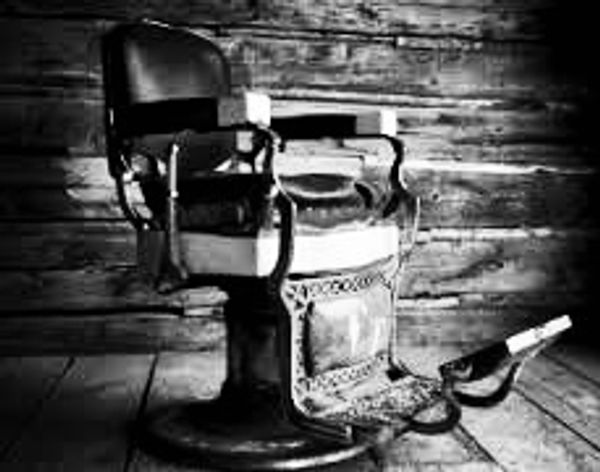
The Barber Chair
A Throne of Innovation: Early Canadian barbers used simple wooden stools, but the late 1800s saw the rise of the specialized "throne". The start of the barber chair we all know today.
- Hydraulic Mastery: Ernest Koken changed the industry with the first hydraulic-operated chair around the turn of the century, allowing barbers to easily raise, lower, and revolve their clients.
- Canadian Legacy: High-end shops in the GTA often sourced chairs from the Takara Belmont showroom in Oakville, Ontario. These chairs often featured built-in ashtrays and heavy porcelain bases, symbolizing the barbershop as a luxurious "refuge for men".
- Modern chairs, while often still retaining a vintage aesthetic, focus on high-density foam, much more durable hydraulic pumps, and ergonomic design for comfort and long-lasting use.
The Canadian Barbershop Heritage & Tradition
Canadian Barbering History
(Photo credit: Bert Naylor's first barber shop, Lindsay, 1923. Courtesy Kawartha Lakes Museum & Archives.)
Barbering in Canada transcends mere hair cutting; it’s a cornerstone of community, a testament to resilience, and a profession deeply embedded in the nation’s history. From the early days of European settlement to the vibrant, artistic shops of today, Canadian barbers have consistently been trusted confidants and skilled craftsmen.
- Colonial Origins: The Itinerant & The Essential; In the early days of Canadian colonization, barbers were scarce. Travellers often performed grooming, or men took care of themselves. However, by the mid-18th century, as cities like Halifax, Quebec City, and York (now Toronto) grew, specialized barbers began to arrive. Early Canadian barbers offered more than just haircuts; they were essential for hygiene. By the early 1800s, specialized shops emerged, such as Thomas Seaton Peacock’s in 1802, who advertised “Ladies and Gentlemen’s Hairdresser” services in York.
- The Wig Era: In the early 1800s, barbering was closely linked to wig-powdering. Due to diseases like smallpox, wigs were common, making barbers indispensable for both maintenance and styling.
- The Victorian Era and the “Barber-Surgeon” While 19th-century medical advancements reduced the role of “barber-surgeons,” the legacy of barbers as healers persisted in Canada through the late 1800s, particularly in rural areas. They were trusted to perform minor medical tasks, such as tooth extractions. Before canned shaving foam, men owned personalized shaving mugs. These mugs, kept on specialized racks in local barbershops, symbolized hygiene and personal status. The Victorian barbershop became a staple of Canadian social life, offering a male-only sanctuary for relaxation and socializing.
- By the early 1900s, barbering in Canada evolved into a more upscale profession. Shops featured white marble counters, ornate barber chairs, and imported tonics. The corner barbershop with its classic red-and-white pole became a common sight in Canadian towns and cities. As Canada’s population grew, immigrant barbers, including Black and European barbers, introduced exciting new styles and techniques, creating community hubs for newcomers. The 1940s saw the rise of “barbershop harmony,” with the first Canadian chapter of the Barbershop Harmony Society chartered in Windsor, Ontario, in 1944. Post-World War II, electric clippers like those introduced by Wahl revolutionized Canadian shops, enabling faster and more consistent tapering, fades, and cuts. However, the 1960s and 70s saw a decline in traditional barbering as longer hair became popular, leading many men to switch to hair salons.
- The modern renaissance truly began in the 1990s, a time with a renewed appreciation for traditional barbering. This period saw the resurgence of classic styles and techniques, as well as a focus on personalized service and customer experience. (Anthony and I were both trained and licensed in the mid 90’s!)
History of Barbering in Georgina
(Photo credit: Georgina Pioneer Village of Cook’s Barbershop in Sutton 1911.)
The history of barbering in Georgina is rooted in its evolution from a seasonal service for summer excursionists to an established community staple in towns like Keswick and Sutton. Early History and Seasonal Services
Historically, Georgina’s grooming industry was heavily influenced by its status as a resort destination.
- Jackson’s Point Excursionists: Between the 1890s and 1960s, Jackson’s Point was a major tourist hub. Small barbershops along Lakeshore Road would "fold up" at the end of the summer and reopen in the spring to serve thousands of visitors and seasonal residents.
- The Royal Hotel: This landmark in Jackson's Point historically housed a barbershop as part of its multi-service offerings, which also included a grocery store and an insurance office.
- Hagerman's Corner: In the Sutton area, local history records a barbershop (pictured above) operating alongside Hagerman’s Dry Goods at Burrows Corners.
- Pioneer & Rural Life While many early Canadian barbers were itinerant, Georgina’s development into permanent hamlets brought more stable businesses. Georgina Village Museum (formerly Pioneer Village): This site preserves the rural history of Upper Canada between 1850 and 1920. While the specific "Barber Shop" building often mentioned in pioneer museums (built around 1916) was moved from elsewhere, it represents the era when barbers were transitioning away from "barber-surgeon" roles toward being social anchors of the village.
- The Social Hub: In early Georgina, the barbershop was a place where local men gathered to discuss life challenges, often over roasted peanuts or cold sodas, reinforcing the shop as a community forum rather than just a place for a haircut.
- The late 20th and early 21st centuries witnessed a significant revival of the traditional barbershop. Modern local barber shops blend old-school charm, like straight razor shaves and hot towels, with more contemporary styling techniques. Furthermore, Canadian barbering is characterized by its diversity. Toronto and the GTA, in particular, showcases a rich tapestry of techniques, from precision fades and beard work to specialized styling.
- The digital shift has also recently played a huge role, with modern barbers using Instagram as a portfolio. To many barbers social media savvy content has become just as important as cutting skills in attracting new clients.
- Our Local Continuity: The Dapper Den located in the uptown Keswick business district was established specifically to help revive the traditional men's barbershop experience within the Georgina area. Continuing the legacy of the neighbourhood shop, focusing on precision haircuts and grooming tailored specifically to men. Emphasizing nostalgic classic techniques like hot towel shaves, neck shaves with a straight razor, scissor styles, tapers and brush cuts.